
Search rankings do not depend only on the number of backlinks. The speed at which you gain them also matters. This is known as link velocity.
Many people believe that more backlinks always mean better rankings. That is not always true.
If your backlink growth rate looks unnatural, it can send negative signals. Search engines do not just count links. They also analyze your backlink profile and its patterns.
The key is natural link growth and consistency. A smart link building strategy leads to stable, long-term results.
In this guide, you will learn what link velocity is. You will understand how it impacts rankings. You will also learn how to maintain a safe link acquisition rate.
What is Link Velocity?
Understanding Velocity
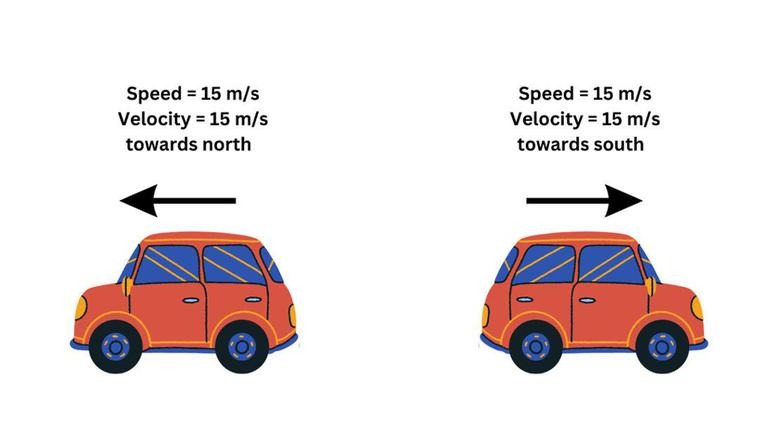
Velocity measures how fast something moves or changes over time. In physics, it describes both the speed and direction of an object.

For example, a car traveling 30 m/s north.
Link Velocity
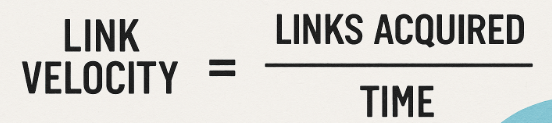
For websites, this idea applies to backlinks as link velocity:
The rate at which your site gains new backlinks.
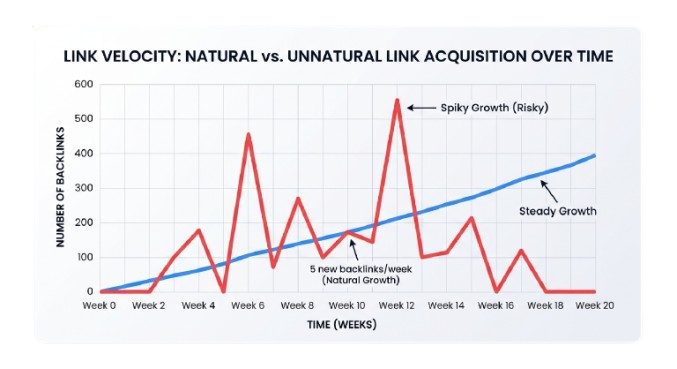
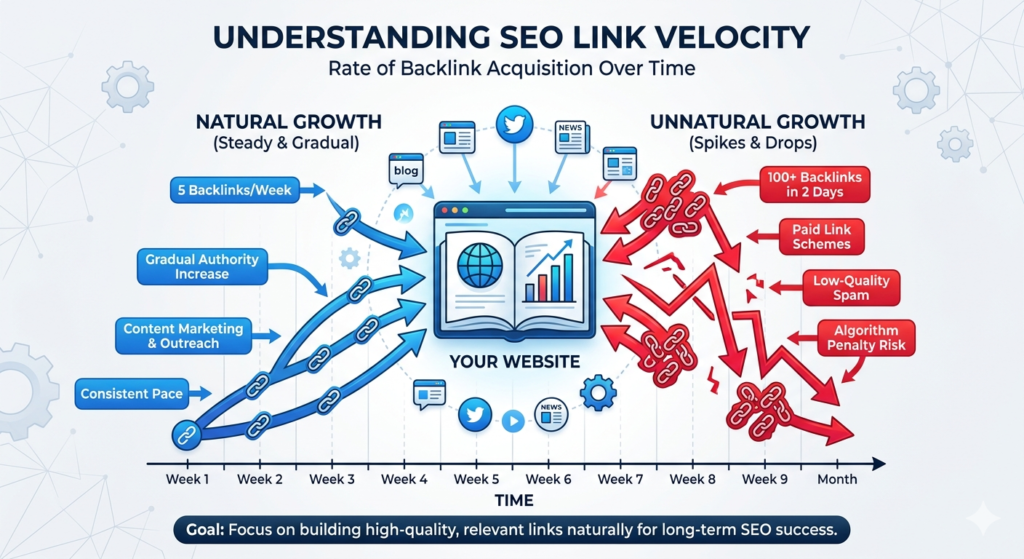
For instance, if your site gets 5 new backlinks each week steadily, that’s a natural link velocity.
Sudden spikes or drops in backlink acquisition can appear suspicious to search engines.
Link velocity is tracked by monitoring new backlinks and referring domains over days, weeks, or months.
Tools like Ahrefs, Semrush, and Google Search Console help measure it. Understanding link velocity lets you plan a safe link building strategy, ensuring growth looks natural and boosts SEO rankings.
How Link Velocity Works in SEO
Link velocity shows search engines how your backlinks grow over time. It helps them identify natural versus unnatural growth patterns.
A steady increase in backlinks signals trust and authority. Sudden spikes may indicate manipulation or spam. Drops in backlinks can also hurt credibility.
Search engines analyze your backlink profile, including referring domains, anchor text diversity, and link quality. They look for patterns that match natural growth in your niche.
Not all spikes are bad. Viral content or PR campaigns can cause temporary increases. The key is balance. Consistency and relevance matter more than speed.
By monitoring link velocity, you can avoid penalties and maintain a strong SEO link building strategy. It ensures your website grows safely while improving search rankings.
Why Link Velocity Matters for Rankings
Link velocity impacts how search engines view your website’s authority. A natural growth pattern signals trust. It shows your site earns links steadily over time.
Sudden spikes in backlinks may appear manipulative. This can trigger penalties or algorithmic filters. On the other hand, slow or stagnant growth may signal low relevance.
Consistent link acquisition helps build credibility and improves domain authority. It indirectly affects SEO rankings by showing your site is trustworthy.
Monitoring backlink growth rate also helps identify harmful or low-quality links. Removing or disavowing these links keeps your link profile healthy.
A balanced link velocity strategy ensures long-term growth without risking penalties. It is a key part of any effective SEO link building strategy.
Does Link Velocity Directly Affect Rankings?
Link velocity is not a direct Google ranking factor. Search engines do not assign points for the speed of backlinks alone.
However, it has an indirect impact. A natural growth pattern improves your website’s authority and trustworthiness. These signals influence SEO rankings.
Unnatural link velocity, like sudden spikes from low-quality sources, can trigger penalties. It may also harm your domain authority.
High-quality backlinks gained steadily show search engines your content is valuable. Consistent link building strategy boosts organic traffic and ranking potential.
In short, link velocity matters because it affects trust, authority, and credibility, which indirectly influence rankings.
Good vs Bad Link Velocity
Not all link velocity is equal. The pattern of growth determines if it’s beneficial or risky.
Good Link Velocity
- Steady and gradual growth over time.
- Backlinks from relevant and high-quality sites.
- Diverse referring domains and anchor text.
- Natural spikes from viral content or PR campaigns.
Bad Link Velocity
- Sudden, unnatural spikes in backlinks.
- Links from low-quality or spammy sites.
- Repeated or over-optimized anchor text.
- Irregular growth that looks manipulated.
Maintaining a good link velocity signals trust to search engines. Avoiding bad link velocity prevents penalties and ranking drops.
What is a Natural Link Velocity?
Natural link velocity is the steady and organic growth of backlinks over time. It shows search engines that your site earns links naturally.
There is no fixed number for “good” link velocity. It depends on your niche, competition, and website age.
For small or new websites, a few quality backlinks per month may be natural. For established sites, higher growth is normal.
A natural pattern avoids sudden spikes or drops. It includes diverse referring domains and varied anchor texts.
Monitoring your backlink growth rate against competitors helps maintain a safe and effective link acquisition strategy.
Link Velocity Graph
Understanding how backlink growth patterns affect SEO and rankings.
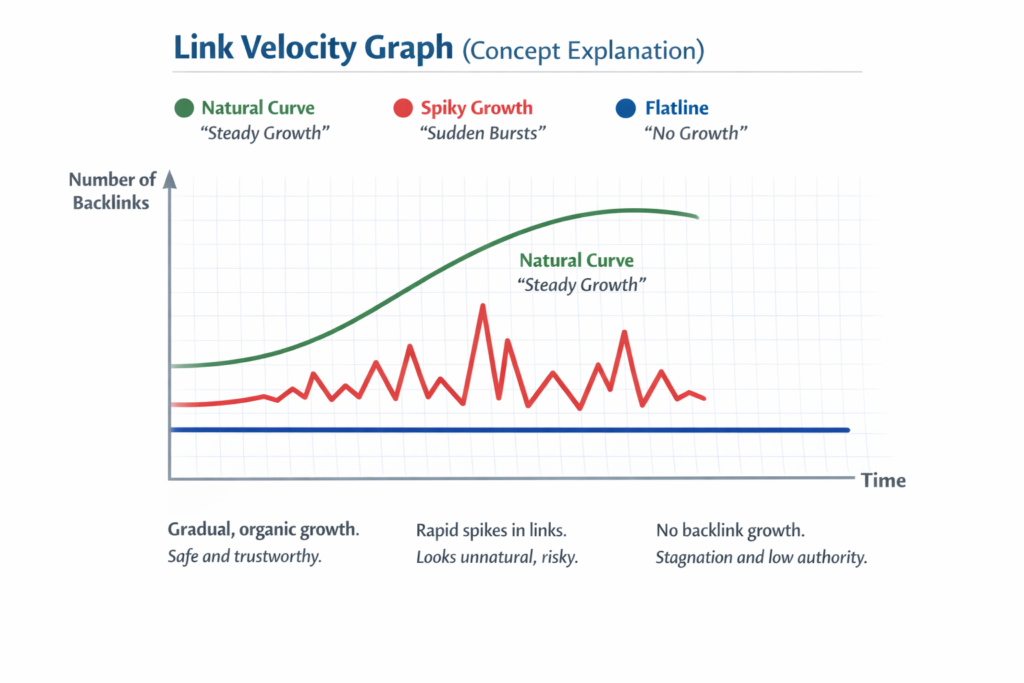
Understanding these patterns helps plan a safe link building strategy. The goal is steady, natural growth that signals credibility to search engines.
How to Measure Link Velocity
Measuring link velocity helps you track the speed of backlink growth. It ensures your link profile looks natural.
Start by tracking new backlinks and referring domains over time. Compare monthly, weekly, or daily growth.
Use tools like Ahrefs, Semrush, or Google Search Console. They provide reports on new, lost, and total backlinks.
Also monitor anchor text diversity and the quality of linking domains. Consistency and relevance are key.
Regular measurement helps identify spikes or drops. It allows you to adjust your link building strategy before any penalties occur.
Common Link Velocity Mistakes
Many websites make mistakes that harm their SEO rankings. Avoiding them keeps your link profile healthy.
- Buying bulk backlinks – Fast links from low-quality sites trigger penalties.
- Ignoring relevance – Backlinks from unrelated sites reduce trust.
- Over-optimized anchor text – Repeated keywords look manipulative.
- Inconsistent link building – Long gaps or sudden spikes signal unnatural growth.
- Ignoring lost backlinks – Removing or monitoring lost links is crucial.
By avoiding these mistakes, you maintain a natural link velocity. It improves credibility and long-term search rankings.
How to Build a Healthy Link Velocity
A healthy link velocity is steady, natural, and sustainable. It builds authority without risking penalties.
- Publish quality content consistently – Great content attracts backlinks naturally.
- Focus on relevant backlinks – Links from related websites improve trust and authority.
- Use digital PR and guest posting – Promote content to earn links safely.
- Diversify anchor text – Avoid repeating the same keywords.
- Monitor your link growth – Track referring domains, new and lost backlinks regularly.
- Maintain consistency – Avoid sudden spikes or long gaps in link building.
A balanced link building strategy ensures long-term SEO success. Natural link growth signals authority to search engines and improves rankings.
Causes of Unnatural Link Velocity
Unnatural link velocity usually comes from risky or low-quality practices. Common causes include:
- Link Farms / PBNs – Links from spammy networks create sudden spikes.
- Cheap Backlink Services – Buying low-quality links can harm authority.
- Negative SEO – Competitors building bad links to your site can affect growth patterns.
- Irrelevant Viral Links – Viral content from unrelated sites can cause unnatural spikes.
Avoiding these helps maintain a healthy backlink growth rate and improves long-term SEO rankings.
Pro Tips for Safe Link Growth
Follow these tips to maintain a natural and effective link velocity:
- Prioritize quality over quantity – A few high-quality backlinks are better than many low-quality ones.
- Focus on consistency – Build links steadily, not in sudden bursts.
- Diversify linking domains – Avoid too many links from the same source.
- Monitor anchor text – Keep it varied and natural.
- Avoid shortcuts – Do not buy spammy links or use link farms.
- Audit backlinks regularly – Remove or disavow low-quality or harmful links.
- Leverage content marketing – Share content that naturally attracts links.
Following these tips ensures safe, sustainable link growth. It strengthens your SEO strategy and improves long-term website rankings.
Conclusion
Link velocity is not just about how many backlinks you get. It is about how fast and naturally they grow.
A steady, consistent growth signals trust and authority to search engines. Sudden spikes or unnatural patterns can harm your rankings.
Monitoring your backlink growth rate and maintaining a safe link acquisition strategy is essential. Focus on quality, relevance, and consistency.
By following a smart link building strategy, you can improve your website’s authority, maintain a healthy link velocity, and boost SEO rankings safely.