

Most backlink outreach fails before it even starts.
Not because of bad emails or weak pitches, but because the target website was never worth pitching in the first place.
In our experience, this is one of the most overlooked problems in link building. Many marketers focus on sending more outreach emails, instead of filtering better websites.
But here is the truth:
👉 A single high-quality backlink from a right website can outperform 20 low-quality placements.
So the real skill is not just outreach, it’s website quality analysis before pitching.
In this guide, you’ll learn a practical, experience-based framework to evaluate any website before pitching. So you only invest time in sites that actually move your rankings forward.
What Does “Website Quality” Really Mean in Backlink Outreach?
Website quality in backlink outreach means how valuable, trustworthy, and relevant a site is for passing SEO value through a backlink.
Most people think website quality is just about Domain Authority or traffic numbers.
But in real backlink outreach, that definition is incomplete and often misleading.
A website can look strong in tools but still be a bad backlink target. For example:
- A site can have high DR but no real traffic
- A site can rank for irrelevant keywords
- A site can be part of a private blog network
So if you rely only on metrics, you may end up pitching the wrong sites.
In our experience, true website quality for backlink outreach comes from a combination of Authority Signal, Relevancy, Organic Traffic Quality, Content Quality and Natural External Linking.
If even one of these is weak, your backlink value drops significantly.
WPQS Website Quality Scoring System
WPQS is a 0 – 100 scoring model that helps you quickly decide whether a website is worth pitching for backlinks based on authority, relevance, traffic, content quality, and spam risk.
Most SEO professionals evaluate websites in a “yes/no” way:
- Is it good or bad?
- Should I pitch or not?
But in real outreach, this approach is too vague.
Different websites have different levels of opportunity, and you need a system to prioritize them.
That is where the WPQS (Website Pitch Quality Score) comes in.
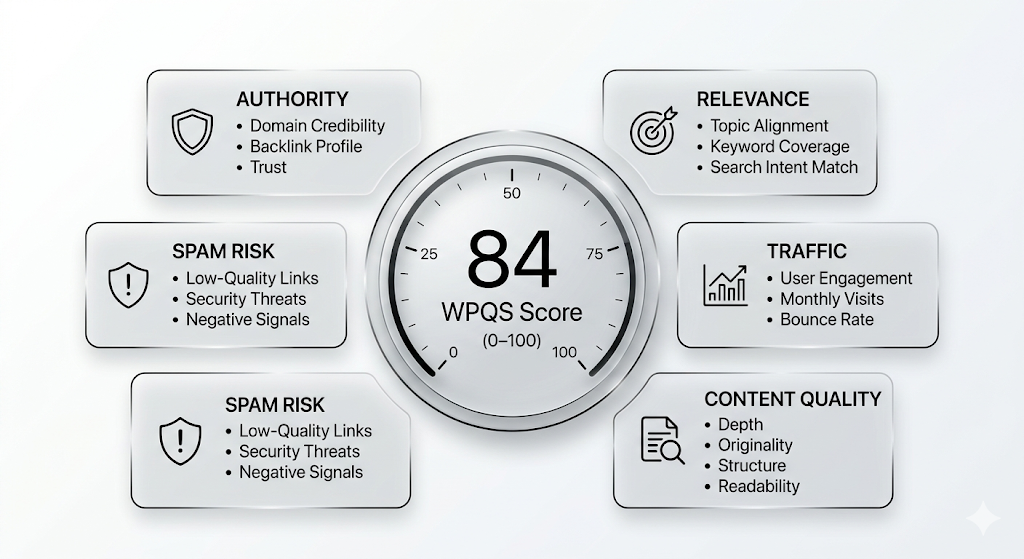
WPQS Score Breakdown
We divide website quality into 5 core pillars:
1. Authority (0 – 20 points)
Check:
- Strong backlink profile from real sites
- Clean indexing history
- No obvious PBN signals
High authority doesn’t mean high DR only, it means real trust.
2. Topical Relevance (0 – 25 points)
Ask:
- Is this website in your niche?
- Does it publish related content?
- Would a backlink feel natural here?
In our experience, relevance often beats authority in outreach success.
3. Organic Traffic Quality (0 – 20 points)
Not all traffic is equal. Check:
- Stable organic traffic trend
- Keyword relevance to your niche
- Traffic from real countries (not spam regions only)
Avoid sites with:
- Sudden traffic spikes
- Irrelevant keyword rankings
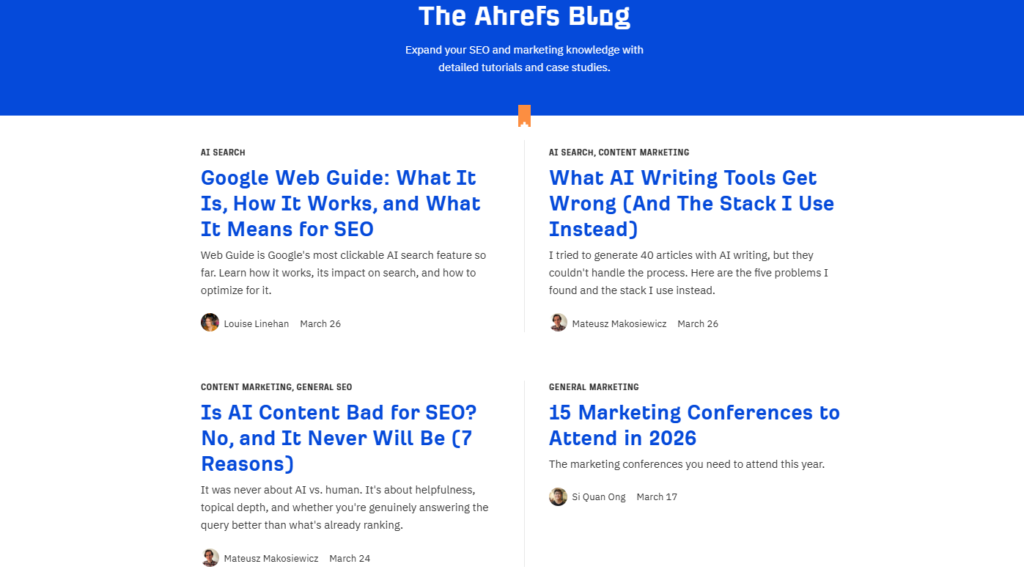
4. Content Depth & Editorial Quality (0 – 15 points)
Evaluate content like a reader, not just an SEO. Look for:
- Helpful, structured articles
- No spun or AI spam content
- Consistent publishing style
What we’ve seen: sites with real editorial effort are more likely to accept quality backlinks.
5. Spam Risk & Link Environment (0 – 20 points)
Check:
- Outbound links to casino, pharma, adult niches
- Too many guest posts
- Irrelevant anchor text usage
- Low-quality link neighborhoods
High spam risk = automatic downgrade
WPQS = Authority + Relevance + Traffic + Content + Safety
Total = 100 points
Practical Example
Imagine two websites:
| Site A | Site B |
| DR 80Low relevanceAccepts random guest posts | DR 45Highly relevant nicheStrong editorial content |
| WPQS: 65 | WPQS: 82 |
| Result: Site B is clearly the better backlink opportunity. | |
How to Check Organic Traffic Quality
Organic traffic quality means how relevant, stable, and real the website’s search traffic is for your niche and SEO goals.
Many SEOs stop at “Does the website have traffic?”
That is a surface-level check.
But in real outreach, traffic quantity alone is almost meaningless.
A website can have 100,000 visits and still be a bad backlink target.
So you need to evaluate traffic quality, not just traffic volume.
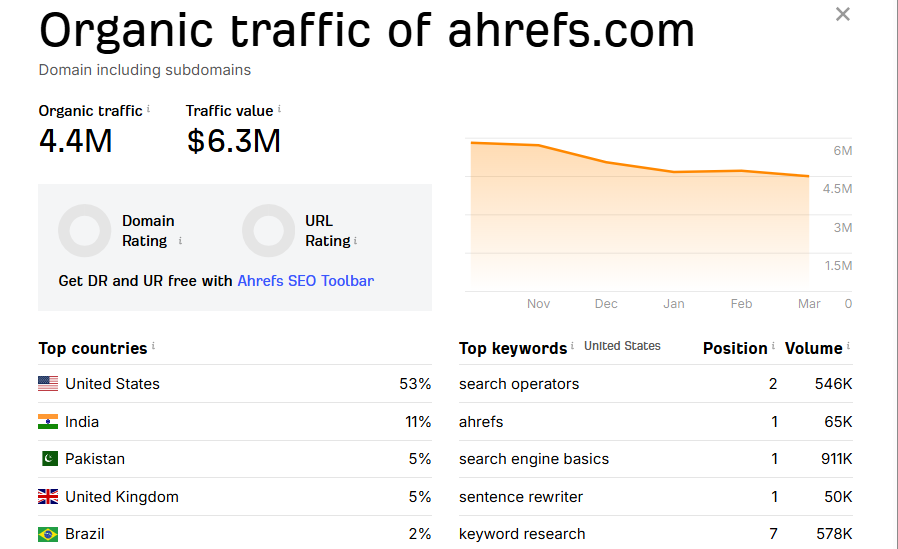
Here is what to check about website organic traffic quality before backlink outreach:
- Is the traffic mostly organic search? Or is it coming from social, referral, or direct spikes? (Should be Organic)
- What keywords is the site ranking for? Are those keywords related to your niche? (Should be Related to your Niche)
- Is traffic consistent over time? Or does it spike and drop suddenly? (Should be Consistent)
- Where is the traffic coming from? (If you target audience is US but traffic is coming from low quality regions, skip it)
- You can use Ahrefs or Semrush to analyze a website’s organic traffic, keyword rankings, and overall traffic quality.
How to Identify Topical Relevance Before Pitching
Topical relevance means how closely a website’s content, audience, and subject matter align with your niche before you pitch it for backlinks.
If you only remember one thing from this guide, remember this:
Relevance often beats authority in backlink success.
A highly relevant website with medium authority will usually outperform a high-authority irrelevant site in real SEO impact.
In our experience, irrelevant backlinks cause three major problems:
- Low SEO impact (Google ignores weak contextual links)
- Lower outreach acceptance rates
- Poor user engagement from referral traffic
A backlink only works well when it fits naturally in context.
Here is what and how to check Topical Relevance:
- What topics does this site publish regularly? Is there a clear niche focus? Or is it a mixed/random content blog? (Should be Niche Focus)
- Check Blog Category, Tag and Internal Linking Structure (Should be relevant)
- Do their articles use similar terms, entities, and concepts as your niche? (Should match relevancy)
- Do they naturally link to external sources? Do they publish guest posts? Are outbound links contextual or random?
- Would this audience actually care about my content?
Spam & Risk Signals You MUST Check Before Pitching Websites
Spam and risk signals are patterns that indicate a website is low-quality, manipulative, or unsafe for backlink placement.
Most SEOs focus on “how to get backlinks,” but ignore a more important question:
“Should I even get a backlink from this site?”
A single toxic link can weaken your entire SEO effort, especially if it comes from a spam-heavy website.
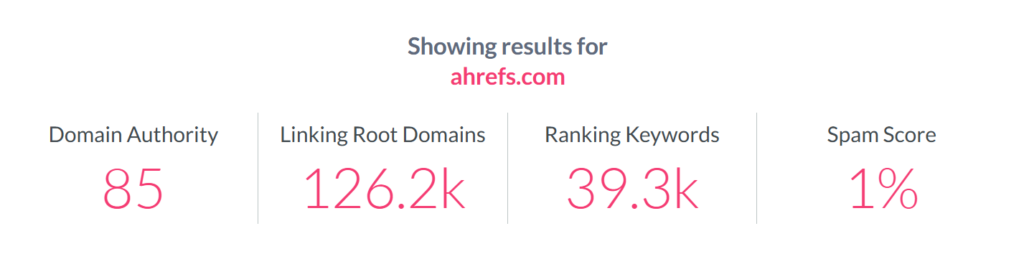
Here is how to check Spam and Risk Signals:
- Too many outbound links on every page. Random anchor text usage. Links to unrelated industries (casino, pharma, crypto, adult). “Do-follow for sale” behavior
- Thin articles (300-500 words with no depth). AI-spun or repetitive content. No real structure or headings. Generic content with no expertise
- Does the site publish too many guest posts? Are guest posts clearly low-quality or unrelated? Does every article look like a “paid placement”?
- Is the site properly indexed in Google? Do blog posts appear in search results?
- Does traffic match content quality?
- You can use Moz’s Spam Score Checker tool to quickly analyze a website’s spam risk and identify potentially harmful backlink signals before outreach.
How to Check If a Website Accepts High-Quality Guest Posts
A website is ready for outreach if it shows clear editorial openness, external linking behavior, and historical acceptance of guest contributions.
Most SEOs waste time pitching websites that look good but never respond.
The real skill is identifying:
“Is this website actually open to quality backlinks?”
In our experience, even highly relevant websites fail outreach campaigns because:
- They don’t accept guest posts anymore
- They only accept paid placements
- They ignore unsolicited emails
- They have strict editorial policies
So qualification is just as important as targeting.
Here is what to check:
- Guest posts match site niche, High editorial quality, Natural link placements
- Contextual outbound links, References to authoritative sources, Balanced linking behavior
- Helpful, informative tone, Real examples and explanations, Professional structure
- Natural contextual backlinks, Balanced anchor usage, Relevant sources cited
- Regular publishing schedule, Recent posts (last few weeks/months), Ongoing content updates
Competitor Link Analysis
Competitor link analysis is the process of identifying, evaluating, and replicating high-quality backlink sources used by competing websites in your niche.
Most people look for websites manually.
But advanced SEOs don’t guess they reverse-engineer competitors.
This step shows you exactly where your competitors get backlinks and why those sites accept them.
In our experience, this approach:
- Reduces outreach research time by 70%+
- Reveals “already proven” backlink sources
- Increases acceptance rate significantly
- Eliminates guesswork completely
If a site already links to your competitor, it is far more likely to link to you.
Here is what to do and check:
- Choose competitors that: Rank for your target keywords, Have similar content depth, Target same audience intent
- Analyze Who is linking to them? Which pages attract backlinks? What type of content gets links?
- What value did competitors provide? Was it content, tool, guide, or data?
- Can I create better content? Can I offer a more updated resource? Can I pitch a similar angle?
- To simplify this process, use Ahrefs or Semrush to extract and analyze competitor backlinks and referring domains.
Summary
Analyzing website quality before pitching for backlinks is not just a technical SEO step, it’s a strategic filter that determines the success of your entire outreach campaign.
If you pitch the wrong websites, even the best outreach emails will fail. But when you focus on the right targets, even simple outreach efforts can generate high-quality backlinks consistently.
In simple terms, website quality is not based on one metric like Domain Authority or traffic alone.
It is a combination of: trust and authority signals, topical relevance, organic traffic quality, content integrity, spam and risk safety, outreach acceptance potential.
If you remember only one thing from this guide, remember this:
Successful link building is not about pitching more websites, it’s about pitching the right ones.