

Many people think outreach means sending a large number of emails and hoping someone replies. In reality, successful outreach is not random; it follows a clear, repeatable process.
When emails are sent without a system, results become unpredictable. Some campaigns get links, while others get ignored. The difference is not luck; it is structure. Professionals and agencies use an outreach pipeline, a step-by-step workflow that turns outreach from guessing into a measurable process.
An outreach pipeline shows exactly what happens from the moment you find a website to the moment a backlink goes live. Instead of focusing only on sending emails, it focuses on building relevance, starting conversations, and guiding opportunities toward placement.
In this guide, you will learn the complete outreach workflow: Prospect → Pitch → Follow-up → Link including how each stage works, why it matters, and how to improve your success rate consistently.
What Is an Outreach Pipeline?
An outreach pipeline is a structured workflow that organizes every step of outreach from finding websites to securing a live backlink. Instead of randomly sending emails, you move each opportunity through defined stages until it either converts or is closed.
Think of it like a funnel: every prospect enters at the beginning, but only qualified and properly handled ones reach the final stage (a published link).
Outreach pipeline vs outreach campaign
- Outreach campaign: A single promotion effort (for a post, page, or offer)
- Outreach pipeline: The repeatable process you use in every campaign
The pipeline matters because most outreach failures don’t happen at the email stage they happen earlier. Poor targeting, wrong contact person, or weak positioning usually cause low reply rates, not the template itself.
A standard outreach pipeline includes four stages: Prospect → Pitch → Follow-up → Link
When each stage is handled correctly, response rates improve, conversations increase, and link placements become predictable instead of random.
Step 1: Prospect – Finding the Right Websites for Outreach
The first stage of your outreach pipeline is prospecting, and it’s the foundation of your entire link-building strategy.
Prospecting is all about finding relevant websites, blogs, and contacts that are likely to respond positively to your outreach. Without high-quality prospects, even the best pitch or follow-up won’t get results.
What is Prospecting?
Prospecting is the process of identifying potential websites or content partners where your link could provide value.
This step isn’t just about quantity, it’s about quality. Your goal is to target sites that are relevant to your niche, have authority in your industry, and engage with their audience actively.
How to Find the Right Prospects
-
Use Search Engines Strategically
- Use Google search operators like:
“keyword” intitle:resources
“keyword” “write for us”
“keyword” inurl:blog - These help you find websites that are actively publishing content in your niche and are open to guest contributions or backlinks.
- Use Google search operators like:
-
Leverage Social Media & LinkedIn
- Identify authors, influencers, and brands in your niche.
- Engaging with their content before pitching it increases response rates.
- Tools for Efficient Prospecting
Qualifying Your Prospects
Not every site you find is worth contacting. Here’s how to qualify them:
- Relevance: Does the site cover topics related to your niche?
- Authority: Does it have strong SEO metrics (domain authority, traffic, backlinks)?
- Engagement: Does the site have active comments, social shares, or regular updates?
Focusing on high-quality prospects improves your chances of securing links and builds long-term relationships.
Common Mistakes to Avoid in Prospecting
- Targeting irrelevant websites that won’t bring SEO value.
- Not doing enough research before outreach sends generic emails decreases response rates.
- Ignoring the decision-maker always finds the right contact person rather than sending emails to generic addresses.
Step 2: Pitch – Crafting Outreach Emails That Get Responses
Once you’ve identified and qualified your prospects, the next stage in your outreach pipeline is the pitch. This is where you introduce yourself, present your value, and ask for the link or collaboration.
A well-crafted pitch can dramatically increase your response rates and set the tone for a positive relationship.
What Makes a Great Outreach Pitch?
A successful pitch is personalized, clear, and value-driven. It should immediately show the prospect why your request matters to them and how it benefits their audience.
Key elements of a strong pitch include:
- Personalization: Mention the prospect’s name, website, or a specific article they wrote.
- Value Proposition: Explain why linking to your content or collaborating will help their readers.
- Clear Call-to-Action (CTA): State exactly what you want, guest post submission, link placement, or content collaboration.
- Conciseness: Keep it short and focused most site owners skim emails quickly.
Types of Outreach Emails
Different types of pitches serve different purposes. Examples include:
- Guest Post Requests: Offering unique content for their blog.
- Resource Page Link Requests: Suggesting your content as a valuable addition to their resources page.
- Collaboration or Partnership Pitches: Proposing joint webinars, content swaps, or co-authored pieces.
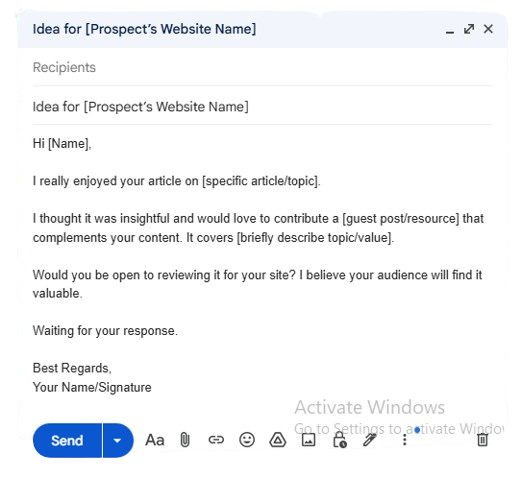
Sample Pitch Template
Here’s a simple example you can adapt:
Common Mistakes to Avoid in Pitching
- Generic Emails: Avoid copy-pasting the same email for all prospects.
- Being Too Pushy: Respect their time; don’t demand a link or post.
- Overcomplicating the Message: Long, wordy emails often get ignored.
- Ignoring Proof of Value: Always show why your content is worth linking to.
Step 3: Follow-up – Turning No Response into Opportunities
Even with a perfect prospect list and a well-crafted pitch, not everyone will respond immediately. That’s where follow-ups come in.
Following up is one of the most critical stages in the outreach pipeline, as it can significantly increase your response rates without being pushy.
Why Follow-ups Matter
Studies show that most responses come after the first follow-up, not the initial email. A polite and timely follow-up reminds prospects of your pitch and shows your persistence without being aggressive.
When and How to Follow Up
- Timing: Wait 3 – 5 days after your initial email. Avoid sending follow-ups too soon, as it can feel intrusive.
- Number of Follow-ups: 1 – 2 well-timed follow-ups are usually enough. Overdoing it can hurt your reputation.
- Tone: Keep it friendly, professional, and value-focused. Reiterate how your content benefits their audience.
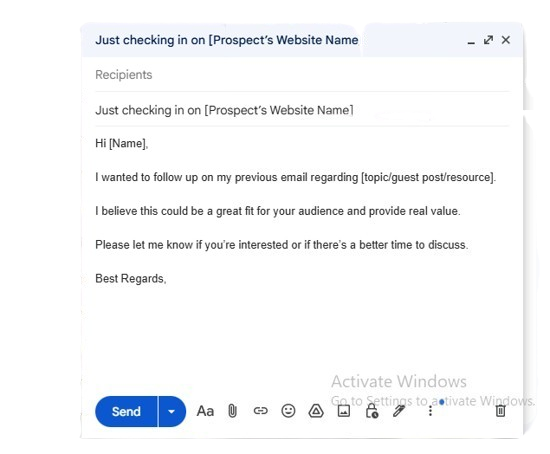
Sample Follow-up Template
Handling Rejections or No Response
- Rejections: Thank them politely and ask if they’d like to stay in touch for future opportunities.
- No Response: After 2 follow-ups, it’s okay to move on, but keep their contact for potential future outreach.
Common Mistakes to Avoid in Follow-ups
- Following up too frequently or on consecutive days.
- Writing vague messages that don’t remind the prospect of your initial email.
- Sounding desperate or pushy always keeps the tone professional.
- Forgetting to include a clear CTA in the follow-up.
Step 4: Link – Securing and Maintaining High-Quality Backlinks
After prospecting, pitching, and following up, the final stage of your outreach pipeline is securing the link. This stage ensures that all your hard work translates into measurable SEO value and long-term relationships.
Securing the Link
Once a prospect agrees to your pitch:
- Confirm Placement: Make sure your content or link is added exactly as agreed.
- Check the Link Type: Prefer dofollow links for SEO value, but nofollow links can still drive traffic and brand awareness.
- Provide Value: If contributing a guest post or resource, deliver high-quality, polished content to strengthen your credibility.
Monitoring and Tracking Links
Keeping track of your backlinks helps you measure the success of your outreach:
- Use Tools: Tools like Ahrefs, SEMrush, or Google Search Console can help monitor live links, traffic, and authority.
- Check Regularly: Ensure links remain active and correctly placed. Reach out politely if any link is removed or broken.
- Track Performance: Monitor referral traffic and improvements in search rankings to see which outreach strategies work best.
Maintaining Relationships
A successful outreach pipeline is not just about one link it’s about building long-term connections:
- Thank your contacts for collaboration.
- Engage with their content on social media or through comments.
- Offer future collaboration opportunities to turn one-time links into ongoing partnerships.
Common Pitfalls to Avoid
- Neglecting Relationship Building: Once a link is live, don’t disappear and maintain engagement.
- Untracked Links: Failing to monitor links can result in lost opportunities if they’re removed or broken.
- Ignoring Link Quality: Low-quality or spammy sites can harm your SEO instead of helping.
- Failing to Follow Up: Even after the link is placed, a brief thank-you or check-in strengthens your reputation.
Step 5: Outreach Tracking System – Keeping Your Campaigns Organized
A well-structured outreach campaign isn’t just about sending emails, it’s about tracking every step of the process. Without a proper tracking system, it’s easy to lose track of prospects, follow-ups, and secured links, which reduces efficiency and success rates.
Why You Must Track Your Campaigns
Tracking your outreach ensures that:
- You know which prospects have been contacted and which haven’t.
- Follow-ups are sent on time.
- You can measure the effectiveness of your campaigns.
- You maintain relationships without missing opportunities.
Simply put, tracking makes outreach predictable and scalable.
Using Google Sheets or CRM Tools
-
Google Sheets:
- A simple and flexible option for small to medium campaigns.
- You can create columns for every step of your pipeline, filter prospects by status, and track progress in real-time.
-
CRM Systems:
- Best for larger campaigns or teams.
- Tools like HubSpot, Pipedrive, or Airtable allow automated follow-ups, email logging, and analytics dashboards.
- CRM also helps maintain long-term relationships by storing contact history and notes.
What Data to Track
To make your tracking system effective, record these key pieces of information:
- Contact Information: Name, email, position, and website URL.
- Status: Not contacted, contacted, replied, interested, rejected.
- Replies: Keep notes on responses to personalize follow-ups.
- Follow-ups: Record dates and content of each follow-up.
- Links: Track which links were placed, type (dofollow/nofollow), and live URL.
Tips for Effective Tracking
- Update your tracking system immediately after each interaction.
- Use color-coding or filters to quickly identify high-priority prospects.
- Review your data weekly to optimize outreach strategy and improve metrics.
Summary: A solid outreach tracking system ensures nothing slips through the cracks. Whether you use Google Sheets or a CRM, recording every step of your pipeline makes campaigns more efficient, measurable, and repeatable.
Step 6: Outreach Metrics That Actually Matter – Measuring What Drives Results
Tracking outreach activity is important, but not all metrics are created equal. Focusing on the wrong numbers, like open rates, can give a false sense of success.
To improve your outreach pipeline and get more backlinks, you need to track metrics that truly reflect performance.
Why Open Rates Don’t Matter
While open rates can indicate if someone opened your email, they don’t tell you if your outreach actually achieved its goal of getting replies, securing links, or building relationships.
Instead, focus on metrics that reflect real outcomes:
Key Outreach Metrics
-
Reply Rate
- Percentage of prospects who respond to your outreach emails.
- High reply rates indicate effective targeting and compelling pitches.
-
Positive Reply Rate
- Percentage of replies that express interest or agreement to your request.
- Helps you measure the quality of your outreach messaging.
-
Placement Rate
- Percentage of outreach that results in a live backlink or published guest post.
- The ultimate metric for judging link-building success.
-
Cost Per Link
- Total cost of outreach (tools, time, or paid campaigns) divided by the number of links acquired.
- Essential for evaluating ROI and optimizing campaigns.
-
Time Per Link
- Average time spent to acquire a single backlink from prospecting to placement.
- Helps identify bottlenecks in your outreach pipeline and improve efficiency.
Tips for Tracking Metrics Effectively
- Use your tracking system or CRM to calculate these metrics automatically.
- Analyze trends over time, not just single campaigns, to refine strategies.
- Focus on quality over quantity: a few high-quality links are worth more than hundreds of low-quality ones.
Summary: By tracking the right metrics reply rate, positive reply rate, placement rate, cost per link, and time per link you can make your outreach pipeline data-driven, efficient, and scalable.
Common Outreach Pipeline Mistakes – What to Avoid
Even the most structured outreach pipeline can fail if you fall into common mistakes. Avoiding these pitfalls will save time, increase response rates, and help you build high-quality backlinks.
1. Prospecting Too Fast
- Rushing through the prospecting stage often results in contacting irrelevant or low-quality sites.
- Solution: Take time to research and qualify each prospect for relevance, authority, and engagement.
2. Sending 100+ Emails per Day
- Mass emailing can lower personalization, reduce reply rates, and even get your email account flagged as spam.
- Solution: Focus on smaller, targeted batches with personalized messages for each prospect.
3. No Follow-ups
- Many prospects don’t respond to the first email. Skipping follow-ups means losing potential opportunities.
- Solution: Send 1–2 well-timed, polite follow-ups to increase response rates.
4. Using Bad Email Accounts
- Generic, unprofessional, or rarely used email addresses reduce credibility and deliverability.
- Solution: Use a professional, verified email account that represents your brand or website.
5. Not Nurturing Relationships
- Outreach isn’t just about one link, it’s about building lasting connections. Ignoring prospects after securing a link can limit future opportunities.
- Solution: Engage with your contacts, thank them, and offer future collaboration to maintain relationships.
Avoiding these mistakes rushing prospecting, mass emailing, skipping follow-ups, using low-quality emails, and neglecting relationships will make your outreach pipeline more effective, sustainable, and predictable.
Final Thoughts
Outreach isn’t about firing off hundreds of emails and hoping for results, it’s about creating a repeatable, predictable system.
When you build a structured pipeline, every stage from prospecting to pitching, following up, and securing links becomes more efficient and measurable.
The key is to focus on relationships, not shortcuts. One strong connection with a relevant site can bring multiple opportunities over time, far outweighing dozens of random outreach emails.
Consistency is what separates successful outreach campaigns from those that fizzle out. A steady, well-planned effort, combined with careful tracking and follow-ups, ensures that your link-building results become predictable, scalable, and sustainable.
Remember: outreach is not just emailing, it’s building a system, nurturing relationships, and staying consistent. Master this, and your backlinks will grow naturally, along with your authority and reach.
People Also Ask
1. How long does it take to get backlinks through outreach?
The timeline for getting backlinks varies, but most campaigns see results within 2–6 weeks. High-quality prospects may take longer to respond, especially if manual approval or content creation is involved. Consistency and follow-ups play a key role in shortening this timeline.
2. How many emails are typically needed to secure one backlink?
On average, it takes 10–20 targeted outreach emails to secure one high-quality backlink. This depends on your pitch quality, relevance of prospects, and follow-up strategy. Focusing on personalization and value usually reduces the number of emails needed.
3. Is outreach still effective for SEO in 2026?
Yes. Outreach remains one of the most reliable white-hat link-building strategies. While algorithm updates have emphasized quality over quantity, a structured outreach pipeline ensures that you gain relevant, authoritative, and sustainable backlinks that improve search rankings.
4. What is a good reply rate for outreach campaigns?
A healthy reply rate typically ranges between 20–30%, though it can vary by niche. A positive reply rate meaning replies that show interest or agree to collaborate is usually 10–15%. Focusing on high-quality prospects and personalized pitches can boost these numbers.
5. What should I include in an outreach pitch email?
An effective outreach email should include:
- Personalization: Prospect’s name or a reference to their content.
- Value proposition: How your content benefits their audience.
- Clear CTA: What you want them to do is publish a guest post, add a link, or collaborate.
- Conciseness: Keep it short and focused to respect their time.
6. How often should I follow up with a prospect?
Wait 3 – 5 days after your initial email before sending a follow-up. Typically, 1 – 2 follow-ups are sufficient. Keep them polite, value-focused, and non-pushy. Following up too often can harm credibility and reduce response rates.
7. Should I focus on relationships or volume in outreach campaigns?
Always focus on relationships over volume. One strong connection with a relevant site can lead to multiple links and long-term opportunities, while mass outreach often results in low-quality links or ignored emails. Consistency and personalization outperform quantity.
8. How can I turn one-time outreach into long-term partnerships?
- Engage continuously: Comment on their content, share their work, and maintain occasional contact.
- Offer future value: Pitch new guest posts, collaborations, or updates to your content.
- Be reliable: Deliver quality content on time and respect agreements.
- Track interactions: Use a CRM or spreadsheet to stay organized and remember key details.