
Most people spend weeks trying to grow their website traffic, but they completely ignore one of the fastest ways to reach a targeted audience: newsletter features.
Thousands of niche newsletters are sent every week to highly engaged subscribers who actually read and click. Getting featured in one of them can bring instant visibility, qualified traffic, and even new leads.
The problem? Most outreach emails sent to newsletter owners are generic, self-centered, or too long which means they get ignored.
If you want your website, tool, or article to be featured, your email needs to be clear, relevant, and easy to say yes to.
In this guide, you’ll learn exactly how to write an outreach email to get featured in a newsletter including structure, tone, and what to avoid.
What Is Newsletter Outreach?
Newsletter outreach is the process of contacting a newsletter creator, editor, or owner to get your website, tool, article, or resource featured in their email newsletter.
Unlike traditional advertising, this method lets you reach a highly targeted and engaged audience who have already opted in to receive updates on a specific topic.
For example, if you run a writing tool like Outlinkreach, you could reach out to a marketing or productivity newsletter with thousands of subscribers and ask them to mention your tool in their next issue.
If they agree, your content goes directly into the inbox of people who are genuinely interested in what you offer generating traffic, exposure, and potential leads instantly.
The goal of newsletter outreach is simple: provide value to the newsletter audience while getting your content in front of the right people.
It’s not about backlinks or SEO; it’s about building awareness, trust, and engagement with an audience that actually cares about your niche.
Before Writing the Email
Writing an effective newsletter outreach email isn’t just about crafting the perfect words it starts with preparation.
Spending time on research and understanding the newsletter you’re targeting dramatically increases your chances of getting featured. Here’s what you should do before hitting “send”:
1. Find the Right Newsletter
Not every newsletter is a good fit for your content or tool. Focus on newsletters that:
- Cover topics relevant to your niche
- Have an engaged audience (check recent issues or open rates if possible)
- Regularly feature tools, guides, or resources similar to yours
Choosing the right newsletter ensures that your content will actually interest the subscribers and increase the likelihood of a positive response.
2. Read a Few Past Issues
Before reaching out, spend some time reviewing 2 – 3 recent newsletters. This helps you understand:
- The style and tone of the newsletter
- The type of content they usually feature (tools, articles, promotions, etc.)
- What resonates with their audience
Referencing something specific from these past issues in your email makes your outreach more personal and shows that you’ve done your homework.
3. Identify the Correct Person
Generic emails to support or info addresses rarely get results. Instead, try to find:
- The newsletter editor
- The founder or content manager
- Any contact listed as handling collaborations or features
Using the right contact increases the chances your email will be read and responded to. LinkedIn, newsletter websites, or the footer of previous emails are great places to find the correct person.
Structure of a Perfect Newsletter Outreach Email
A newsletter outreach email should be short, clear, and value-focused. Every part of the email should serve a purpose: get the editor’s attention, show relevance, and make it easy to say yes. Here’s a breakdown of the perfect structure:
1. Subject Line
The subject line is the first thing the editor sees, so it must be specific, concise, and non-salesy.
Tips:
- Keep it under 50 characters
- Mention the value for their audience
- Avoid words like “promotion” or “sponsor”
Examples:
- “A tool your readers might find useful”
- “Resource for [Newsletter Name] subscribers”
- “Quick idea for your next issue”
2. Personalized Opening
Show that you’ve read their newsletter and aren’t sending a generic email. Personalization makes the email stand out.
Tips:
- Mention a recent newsletter issue or article
- Compliment their content genuinely
- Avoid generic lines like “I love your newsletter”
Example:
“Hi [Editor Name], I really enjoyed your latest issue on productivity hacks. The section about time management tools was especially helpful.”
3. Short Introduction
Briefly introduce yourself or your company/tool. Keep it 1 – 2 lines only.
Tips:
- Who you are
- What your website/tool does
- Don’t oversell yourself
Example:
“I run Outlinkreach, a platform that helps marketers and writers streamline their outreach campaigns.”
4. Value Proposition (Most Important Part)
Editors care about their subscribers, not you. Clearly explain why featuring your tool/article benefits their audience.
Tips:
- Focus on the audience’s gain
- Be specific and concrete
- Keep it short and relevant
Example:
“I thought your readers might find our new email outreach template guide useful. It’s designed to help marketers save time and get better responses.”
5. The Ask (Your Request)
State clearly what you’re asking for a feature, a mention, or inclusion in a resources section. Polite and concise.
Tips:
- One line is enough
- Avoid pressure
- Make it easy to accept
Example:
“If you think it’s relevant, would you consider mentioning it in your next newsletter?”
6. Soft Closing
End the email politely and show appreciation. Optional, but adds a friendly tone.
Example:
“Thanks for considering this, and keep up the amazing work with [Newsletter Name]!
Best,
[Your Name]”
Example Newsletter Outreach Email
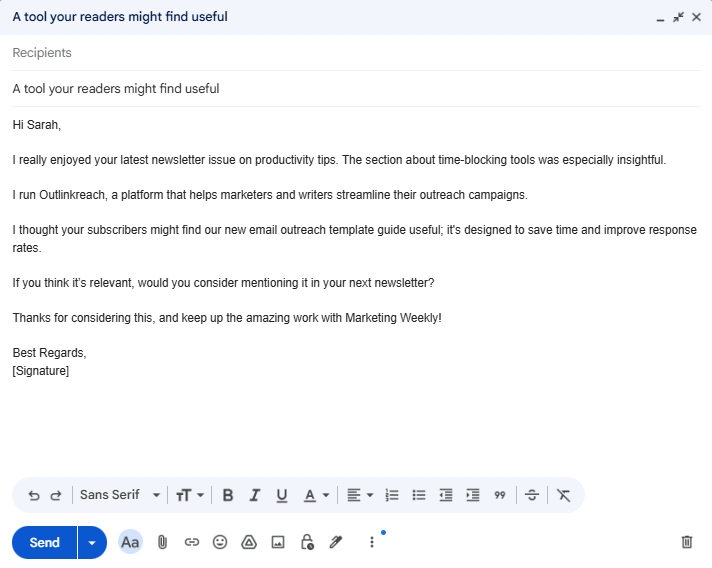
Key Notes on This Example
- Subject line: Short, clear, and audience-focused
- Personalized opening: Mentions a specific newsletter issue
- Intro: 1 – 2 lines about who you are
- Value proposition: Explains the benefit for subscribers, not for you
- Ask: Simple, polite, easy to say yes
- Closing: Friendly and appreciative
Common Mistakes That Get Emails Ignored
Even a good email can fail if it has these issues:
- Too Long: Keep it under 150 words; focus on value + ask.
- Generic Templates: Personalize with editor name & newsletter content.
- Self-Centered: Highlight benefits for their audience, not yourself.
- Attachments: Avoid them; share links instead.
- Aggressive Follow-Ups: Wait 3 – 5 days; max 1 – 2 polite reminders.
- Weak Subject Lines: Be clear, concise, and show reader benefit.
How Long Should the Email Be & When to Follow Up
Keeping your newsletter outreach email short and timely increases your chances of getting a reply:
- Ideal Length: 100 – 150 words. Short emails are easier to read and respond to.
- Use Tools: Check your email length with Outlinkreach’s Email Length Checker to stay concise and professional.
- Follow-Up Timing: Wait 3 – 5 days before sending a polite reminder. Limit follow-ups to 1 – 2 emails to avoid overwhelming the editor.
- Keep It Polite: A soft, friendly tone works better than pressure or urgency.
By following these guidelines, your outreach email will be clear, readable, and more likely to get featured.
Pro Tips to Increase Reply Rate
Even a perfectly structured email can be ignored if it doesn’t stand out. Here are actionable strategies to improve your chances of getting featured:
-
Personalize Specifically
- Mention a recent newsletter issue, article, or section
- Show that you actually read their content
-
Focus on Value for Their Audience
- Explain how your tool, article, or resource benefits subscribers
- Avoid talking too much about yourself
-
Be Clear and Concise
- Editors are busy short emails get read first
- Use bullet points if needed
-
Suggest Exact Placement
- If possible, indicate which section of their newsletter your content fits
- Makes it easy for them to say yes
-
Offer Optional Value
- Cross-promotion, sharing their newsletter, or providing an extra resource can make your pitch more appealing
-
Polite & Friendly Tone
- Avoid aggressive or pushy language
- A human tone always works better than a template
Following these tips can significantly increase your response rate and make your newsletter outreach more successful.
Can You Use ChatGPT to Write Newsletter Outreach Emails?
Yes, ChatGPT can be a helpful tool to draft newsletter outreach emails, but it should be used carefully. The key is to avoid generic, robotic messages and always personalize the email.
How to use ChatGPT effectively:
- Draft Quickly: Generate a base version of your email to save time.
- Add Personalization: Include the editor’s name, mention a recent newsletter issue, or refer to specific content.
- Focus on Value: Make sure the AI-generated draft emphasizes the benefit for the newsletter’s audience, not just you.
- Edit for Human Tone: Adjust wording so it feels natural, friendly, and readable.
Tip: ChatGPT is best used for drafting and brainstorming, not copy-pasting. Personal touches and context make the difference between a read email and a deleted one.
Using AI smartly can speed up your outreach workflow while still keeping emails human and high-quality.
Conclusion
Newsletter outreach is one of the fastest ways to reach a highly engaged and targeted audience.
The key to success isn’t just having a great tool or article, it’s writing a clear, concise, and audience-focused email that newsletter editors can quickly read and approve.
By doing proper research, personalizing your email, highlighting value for subscribers, and avoiding common mistakes, you can significantly increase your chances of getting featured.
Tools like Outlinkreach’s Email Length Checker can help you stay concise, while AI assistants like ChatGPT can speed up drafting as long as you keep the tone human and relevant.
Start applying these strategies today, and watch your newsletter outreach turn into real traffic, leads, and brand visibility.