

Backlink outreach is still one of the most effective ways to improve search rankings, increase organic traffic, and build website authority.
But the real challenge isn’t just sending emails, it’s finding the right websites, identifying the right person, writing persuasive messages, and tracking everything properly.
That’s where the right backlink outreach tools make a difference.
Instead of listing random software, this guide breaks down the best backlink outreach tools based on the actual workflow SEO professionals follow from website prospecting to email tracking.
Whether you’re a solo SEO, blogger, or agency owner, you’ll discover which tools help you find link opportunities, collect verified emails, manage outreach campaigns, and secure high-quality backlinks more efficiently.
Category 1 – Website Prospecting Tools (Finding Link Opportunities)
Before you send a single outreach email, you need the right websites to contact. Strong backlink outreach starts with finding relevant, authoritative sites in your niche. If your prospect list is weak, even the best email copy won’t help.
Here are the top tools SEO professionals use to find high-quality link opportunities.
1. Google Search Operators
Many SEOs underestimate how powerful Google can be for prospecting. With advanced search operators, you can manually find highly relevant websites in your niche.
For example:
- “write for us” + digital marketing
- intitle:guest post + SEO
- inurl:resources + marketing
- “best tools” + your keyword
This method is completely free and gives you very targeted results. It works best for guest posting, resource page link building, and niche-specific outreach. However, it requires manual effort and filtering.
If you’re just starting with backlink outreach, Google search operators are the easiest way to build an initial prospect list.
2. Ahrefs
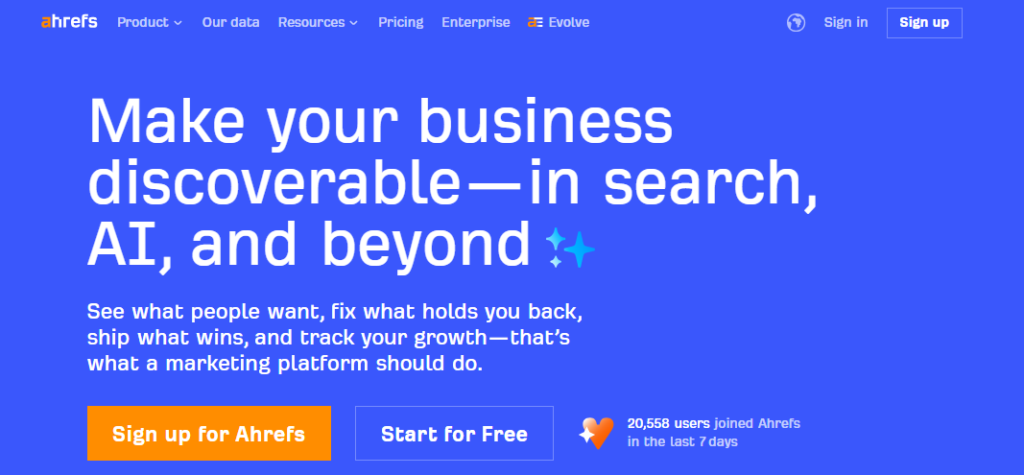
Ahrefs is one of the most powerful tools for competitor backlink analysis. With Ahrefs, you can:
- Analyze competitor backlinks
- Export referring domains
- Filter by Domain Rating (DR)
- Filter by traffic (e.g., 1000+ organic traffic)
- Filter dofollow links only
One major advantage is that when you export the referring domains list, website metrics like DR, traffic, and URL rating are already included. This saves time because you don’t need to manually check stats again you only need to review relevancy.
For serious SEO professionals, Ahrefs makes prospecting fast and data-driven.
3. SEMrush
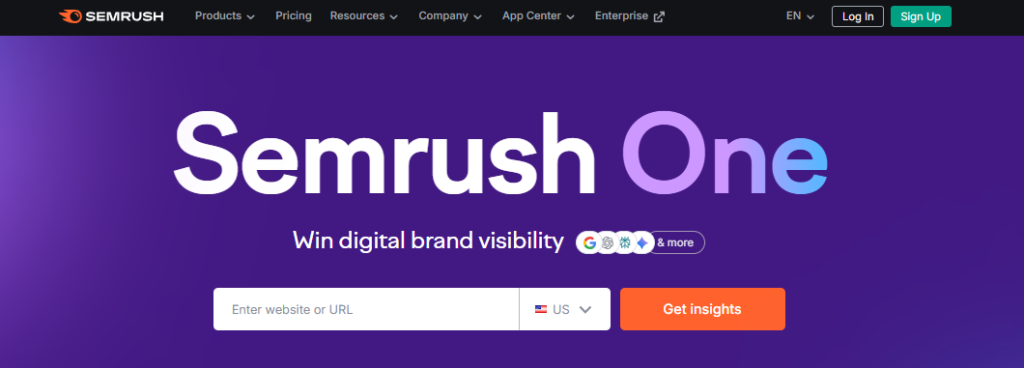
SEMrush is another strong alternative for backlink research and opportunity discovery. Key features include:
- Backlink Analytics
- Backlink Gap Tool (find sites linking to competitors but not you)
- Authority Score filtering
- Traffic-based filters
- Easy export options
Just like Ahrefs, SEMrush provides metrics directly in exported sheets, allowing you to sort and filter prospects quickly. You can easily find high-traffic websites, niche-relevant domains, and authority-based opportunities.
If you want scalable and strategic backlink outreach, tools like Ahrefs and SEMrush are essential for building a high-quality prospect list.
Category 2 – Finding the Right Person (Decision Maker Identification)
Finding the right website is only half the job. The real difference between ignored emails and successful backlinks is contacting the right person.
If you send outreach emails to generic addresses like info@domain.com, your chances of getting a reply drop significantly. Instead, you should reach out to the person responsible for SEO, content, or marketing.
Here’s the best tool for that.
4. LinkedIn
LinkedIn helps you identify the right decision-maker inside a company or website. With LinkedIn, you can:
- Search for the website name
- View employees working there
- Filter by roles like:
- SEO Manager
- Content Manager
- Marketing Manager
- Digital Marketing Specialist
If you’re requesting a backlink, the SEO or marketing person is usually the best contact. Since SEO teams handle optimization and link building, they are more likely to understand your outreach proposal.
Another benefit of LinkedIn is that you can:
- Check the person’s experience
- Understand their responsibilities
- Personalize your outreach email based on their role
For example, instead of writing: “Hi, I want a backlink.”
You can write: “I saw you manage SEO at [Website Name], and I found a relevant resource on your blog that could complement one of your articles.”
That small personalization significantly improves reply rates.
Category 3 – Email Finder Tools (Getting Verified Contact Information)
Once you’ve identified the right person on a website, the next step is finding their professional email address. Accurate and verified emails are critical for successful backlink outreach because high bounce rates can damage your sender reputation.
Here are the most reliable email finder tools SEO professionals use.
5. Apollo.io
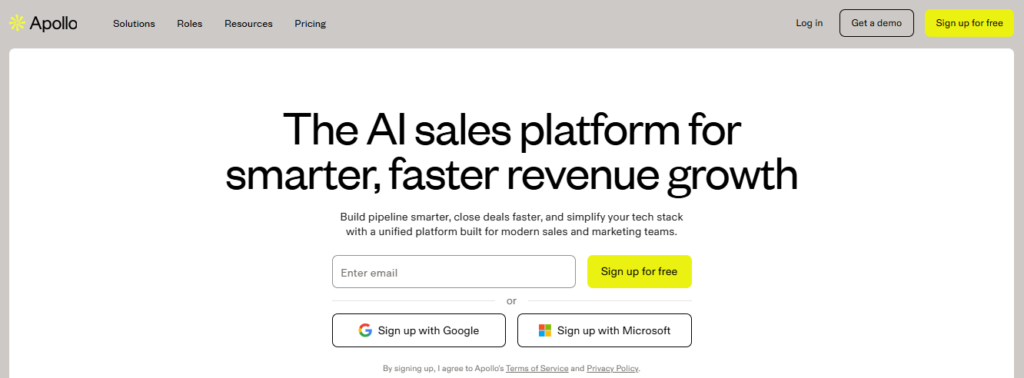
Apollo.io is a powerful lead generation and email discovery platform. With Apollo, you can:
- Search companies and employees
- Filter by job title (SEO Manager, Marketing Head, etc.)
- Access verified email addresses
- Export lead lists in bulk
It’s especially useful if you’re handling large-scale outreach campaigns and need structured prospect data.
6. Hunter.io
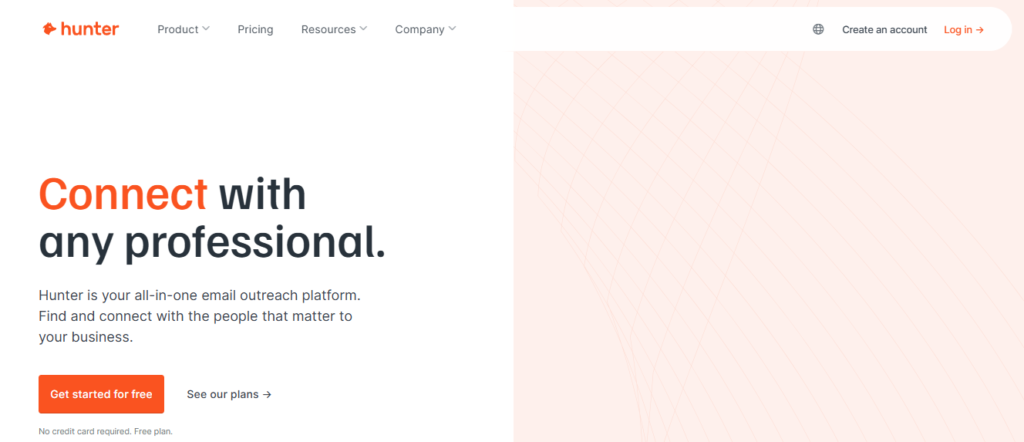
Hunter.io is widely used for domain-based email searches. Key features include:
- Domain search (find all emails associated with a website)
- Email finder (search by name + domain)
- Email verification
- Confidence score for each email
Hunter is simple, clean, and effective for finding professional emails quickly.
7. Snov.io
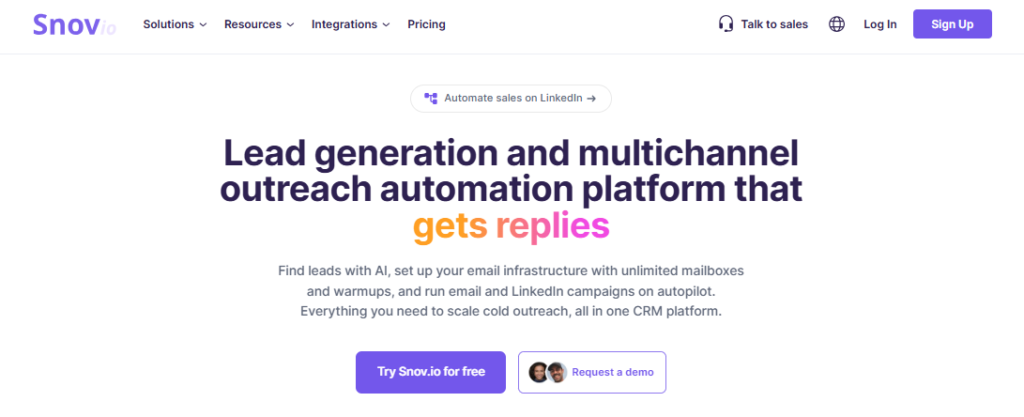
Snov.io combines email finding and outreach features in one platform. With Snov.io, you can:
- Find emails by domain
- Verify email addresses
- Use a Chrome extension while browsing websites
- Build small outreach sequences
It’s useful for SEO professionals who want both email discovery and basic outreach functionality in one tool.
Category 4 – Writing Effective Outreach Emails
Finding websites and emails is important but your outreach email decides whether you get ignored or earn a backlink. A well-written, personalized email significantly increases reply and link acquisition rates.
Instead of writing every email from scratch, SEO professionals use AI to speed up the process while keeping personalization intact.
8. ChatGPT

OpenAI’s ChatGPT helps SEO professionals draft personalized backlink outreach emails in minutes. With ChatGPT, you can:
- Generate cold outreach email templates
- Rewrite emails for a professional tone
- Create follow-up sequences
- Personalize emails based on website type
- Shorten or simplify messages
For example, you can prompt: “Write a personalized backlink outreach email for a digital marketing blog.”
However, AI should assist, not replace human judgment. Always:
- Add manual personalization
- Reference a specific article from their site
- Keep the message concise and relevant
The best-performing outreach emails are short, personalized, and value-driven.
Category 5 – Sending & Managing Outreach Campaigns
After crafting your outreach emails, the next step is sending them and keeping track of all interactions. Proper management ensures you don’t miss follow-ups and helps you maintain a professional approach.
For SEO professionals, there are two main ways to handle this: manual sending with organization systems or using email automation tools.
9. Manual Outreach (Gmail + Google Sheets System)
Even in 2026, manual email outreach can be highly effective, especially for small-scale campaigns. The key is organization.
You can use:
-
Google Sheets to track each outreach:
- Columns like Website, Contact Name, Email, Status (Sent / Follow-Up / Replied / Link Live), Notes, and Link URL
- Easy filtering and sorting to see pending follow-ups
-
Gmail Labels & Filters to manage inbox:
- Labels like Outreach – Sent, Outreach – Follow-Up, Outreach – Replied, Outreach – Link Live
- Automatic filtering ensures replies don’t get lost in the inbox
This system acts as a lightweight CRM. It’s free, flexible, and works perfectly for solo SEOs or small teams.
Tip: Even with manual outreach, consistency is key. Update your sheet every time you send an email or get a reply to avoid missed opportunities.
Optional Automation Tool (Mailshake / Similar)
If your campaign grows beyond a handful of emails, automation tools like Mailshake can help:
- Send large-scale outreach emails
- Automate follow-ups
- Track open and reply rates
- Maintain personalization using merge tags
Automation is best suited for agencies or marketers handling hundreds of emails per week. For smaller campaigns, manual outreach with a structured system often works just as well.
Category 6 – Email Tracking & Optimization
Once your outreach emails are sent, it’s essential to track opens, clicks, and replies. Without tracking, you won’t know which campaigns are working or where improvements are needed. Proper tracking helps you refine your strategy and increase backlink acquisition rates over time.
10. Email Tracker Extension
An email tracker is a simple but powerful tool for monitoring engagement. For example, extensions like Mailtrack or Gmail-integrated trackers allow you to:
- See when recipients open your email
- Track clicks on links within your email
- Optimize subject lines and sending times based on engagement
- Identify non-responsive contacts for follow-up
By combining an email tracker with your Gmail + Google Sheets system, you get a lightweight but effective outreach CRM. This ensures you never miss a follow-up, understand which messages resonate, and measure the success of your backlink outreach campaigns.
With these ten tools categorized by workflow from website prospecting to email tracking SEO professionals can streamline their backlink outreach, increase reply rates, and secure high-quality backlinks efficiently.
Final Thoughts
Backlink outreach is a critical part of SEO, but success doesn’t come from sending hundreds of generic emails. It depends on finding the right websites, reaching the right person, writing personalized messages, and tracking every step.
By following a structured workflow and using the right tools, you can save time, improve reply rates, and secure high-quality backlinks consistently.
From Google, Ahrefs, and SEMrush for prospecting, to LinkedIn, Apollo, Hunter.io, and Snov.io for finding contacts, then ChatGPT for email writing, and finally manual outreach, automation tools, and email trackers for execution and optimization each tool serves a clear purpose in the outreach process.
Even simple systems like Google Sheets and Gmail labels can act as a lightweight CRM for small campaigns, while automation tools and trackers help scale outreach for larger projects.
Ultimately, the combination of strategy, personalization, and proper tracking is what turns outreach into real results. Focus on relevance and relationship-building, and your backlinks along with your website authority will grow steadily.